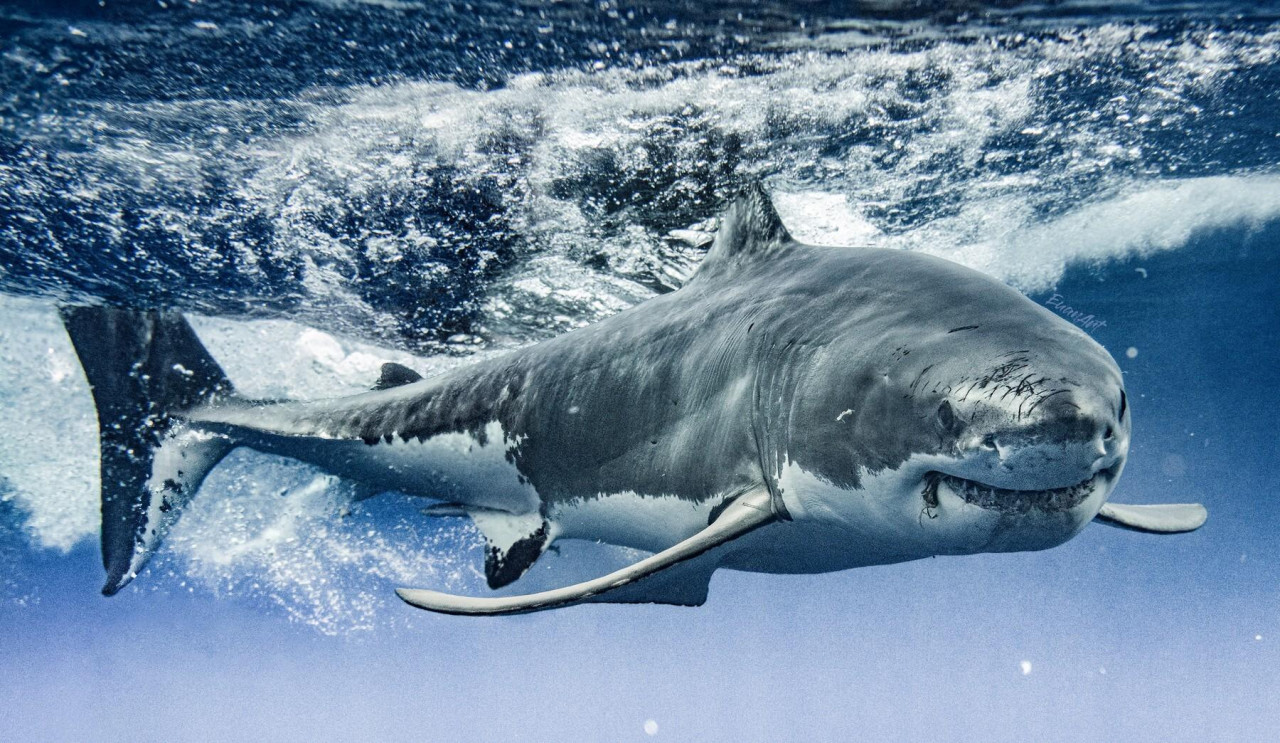
Scientists have confirmed a new, rare sighting of a great white shark (Carcharodon carcharias) in the Spanish Mediterranean, based on the genetically verified capture of a young specimen in April 2023. The finding was documented in a scientific paper published in Acta Ichthyologica et Piscatoria, authored by researchers from the Spanish Institute of Oceanography (IEO-CSIC) and the University of Cádiz.
The encounter occurred on April 20, 2023, when local fishermen accidentally caught a juvenile great white shark in fishing nets within the Spanish exclusive economic zone off the coast of Alicante, in an area characterized by submarine canyons and relatively deep waters close to shore. The specimen measured about 2.1 meters in length and weighed between 80 and 90 kilograms, indicating that it was a young individual.
Although the capture was accidental and the shark was already dead when brought aboard, the fishermen photographed the animal and notified scientists with whom they regularly collaborate. Genetic analysis of collected tissue samples confirmed the species as a great white shark, making this one of the few verified records of the species in Spanish Mediterranean waters in recent decades.
Researchers then conducted a comprehensive review of historical records of great white shark occurrences in the Mediterranean. These records include accidental catches, direct sightings, photographs, fishermen’s reports, and even indirect evidence such as bite marks on stranded marine animals. The review shows that the species has maintained a persistent but extremely rare presence in Spanish waters since at least the mid-19th century.
Data reveal approximately 60 recorded occurrences in the Spanish Mediterranean since 1862. However, most of these were isolated events or indirect evidence, and the true frequency of encounters remains extremely low. For this reason, the species is sometimes described as a “ghost” of the Mediterranean ecosystem — present, but only sporadically and unpredictably observed.
The discovery of a juvenile specimen is particularly significant because it raises questions about the demographic structure of the Mediterranean great white population and whether active reproduction may be occurring within the basin, or if young individuals are migrating from other regions. Movements of great white sharks are often linked to the migration patterns of Atlantic bluefin tuna, one of their important prey species.
Despite the great white shark’s reputation as a formidable apex predator, experts emphasize that encounters with humans remain extremely rare and do not indicate increased danger along coastal areas. Over a period of more than 160 years in the Spanish Mediterranean, only two documented incidents involving humans have been recorded, suggesting that the species rarely approaches shallow coastal waters.
The scientific community also urges caution in interpreting this finding: the presence of a single juvenile does not necessarily indicate population recovery. It may instead reflect improved monitoring, better cooperation with fishermen, and enhanced data sharing among researchers.
In the Mediterranean, great white sharks are considered critically endangered, with populations severely declining due to illegal fishing, depletion of prey species, habitat degradation, and accidental bycatch. Even rare confirmed appearances are ecologically significant, as apex predators play a crucial role in maintaining marine ecosystem balance.
Source: Jutarnji.hr